Family Camper Project: Selecting the vintage travel trailer

Selecting the right vintage camper for us was a journey in itself.
This is the first installment of a series that will document the decision making and lessons learned as we pick out, restore, and ultimately take to the road with our family’s vintage travel trailer. 

1974 Argosy 22

Our new-to-us travel trailer, ready for pick up from the seller.

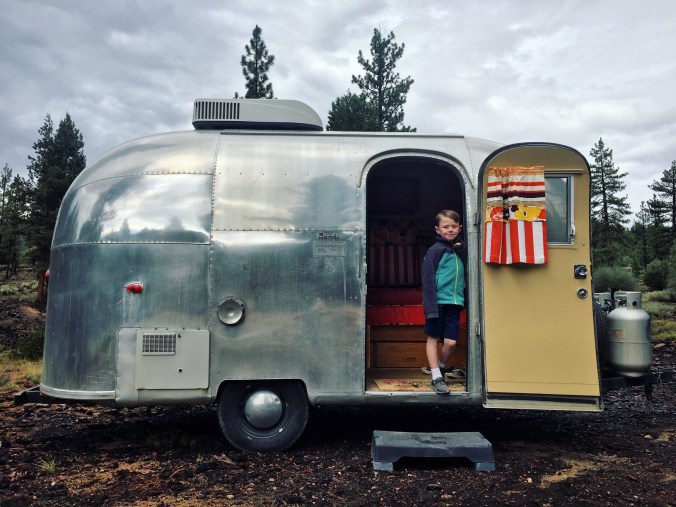
This last year, we fell in love with our my mom’s 1963 Airstream Bambi. Using it extensively for several months solidified our preference for a travel trailer over the various other options. I had previously considered a truck camper, but I use my truck too much for my day job to deal with the on/off routine. At one point, a converted panel van seemed attractive (#vanlife will do that to you) and we saw plenty of enviable examples, but they can be small, cost prohibitive, and I don’t want to have another vehicle to take care of. We have a reliable truck, and room to store a camper… so a travel trailer made a lot of sense for us. And given our recent history with Bambi– and the fact I’m a carpenter– a vintage travel trailer would be the top choice.
bambi

The Bambi: cute as a button, but a little small.

In pulling the Bambi around on frequent camping trips with the boys, I came to understand a few criteria for what we’d want:
— not too big. Coming from a hiking & bikepacking background, we don’t need a huge interior space… and we like to dry camp. A lot of camp spots in Joshua Tree National Park, for example, can’t handle a camper much larger than 24′ judging by my own eyeball work. We don’t spend much time in RV parks, and our working philosophy for camping leans more toward living outside for meals, gathering time, etc.
— not too small. At 16′ the Airstream Bambi is a great size for a couple, over a weekend… but once you increase days, or number of people, and it begins to feel “small” fast. At least for us, anyway. We wanted two “real” sized beds, and a comfortable “living space” where we could all be together for meals or inclement weather.
— dual axles, and heavier duty tires. More rubber on the ground means a wider distribution of load, which I take to mean *potentially* lower risk of a failure that’d stop us in our tracks. Since we’d been pulling Bambi on forest roads, sometimes in remote locations, this became an important factor. Which leads to…
— a little more ground clearance. Because we like to go over hill, and over dale…

So… an Airstream, right?
I’ve long been attracted to Airstreams– their quality construction and elegant style are both timeless… I started looking at 22′ and 24′ Airstreams, and quickly discovered they’re pretty much the most sought-after lengths, apart from the less common, shorter sizes like the Bambi’s. One thing led to another, and I started learning about Argosy’s, the shiny Airstream’s cousin. What’s an Argosy? Most briefly, they were a line of coaches produced by Airstream in the ’70s, aimed to bring a medium price point to the competitive market at the time. Considered the “painted Airstream,” they’re painted rather than polished. This is necessary because their “domes” are made of galvanized steel rather than strips of aluminum. The rest of their shell is made of aluminum throughout (again, painted, not polished) and these models were early to incorporate some of the experimental “new” features that came to shiny Airstreams later– such as the panoramic front window (which is fantastic) and the wider body floorplan. The more I learned about the Argosy line, the more I came to enjoy them.

Making the decision to pull the trigger on an Argosy
In deciding on an Argosy, I considered factors such as “how long do we want to keep it?” and dollars in, to dollars out… time invested, work that’ll need to be performed, etc. In non-restored condition, Argosy’s fetch a little less in initial cost than a comparable shiny Airstream, and can come up in value quite a bit after work has been done. Not as high as a fully decked out shiny Airstream, but then again I’m also not doing this as a “flip” project.
In addition to the work you’d expect of any Airstream remodel, I also had to came to terms with the fact that an Argosy– being 40+ years old– would most likely require a new paint job. I decided to look at this as an opportunity to paint our future camper whatever color(s) we want to dream up, and factor that into the project cost.
Argosy checked a lot of boxes.

IMG_5327

Nuts & Bolts 
There were a number of considerations for go/ no go in looking at any vintage camper: Does the roof leak? How’s the plumbing? (freeze damage is sometimes easy to fix, other times not so easy…) Is the subfloor in good shape? How’s the cabinetry, countertops, and interior framing holding up? Do the appliances work? All of them? On electric, and propane? How are the tires? (most travel trailer tires expire by age, rather than wear, it seems) Do the electric brakes work?

I resigned to assume that any vintage trailer will most likely require its wheel bearings to be repacked, and new tires to be put on to hit the road with peace of mind. More dollars to add to the plan.

Saying yes, making a plan
Right after we took possession of our new camper, I did a thorough “walk through” of all the work that’ll need to be performed. I did this in a walk around fashion, starting at the front with the propane bottles and walking clockwise, then going inside front to back, examining everything and taking notes on paper. Are the propane valves expired? How are the hoses? Does the exterior light work? How about the awning? And so on. Once I had a list of all the wants & needs, I organized them by type, and made a priority sheet. This started more or less as a “dream” sheet (the one that has the onboard solar power, LED uplightling, etc) and worked into a “right now” sheet, or a “needs to happen before we can camping this summer” sheet.
The next step, which we are on now, is determining how much money can be spent over how much time, and then… setting a goal for our first time to take it out camping!


Ash Meadows & Death Valley

“I heard they call it Death Valley because people DIE out there.” — the little one. 

road

We loaded up the Bambi and took off from Big Bear after school on Friday… accidentally blasted through Barstow (rats, there’s an In N Out there and I’m still on Whole 30 for another 10 days or so) and ended up dining in Baker– that’s the town with the giant thermometer, in case you’re wondering.

From there it was a northerly jump into the desert night. A sky so dark I wondered if I could see my hand in front of my face with the lights off. I didn’t check.

We arrived at Ash Meadows NWR late, with the boys snoozing in the truck.
The next morning we set up Bambi for my mom to stay in, and explored a bit of the refuge. Ash Meadows is home to endangered, and threatened species of Pupfish, and is said to be host the greatest concentration of endemic animal & plant life in the United States– and second greatest concentration of endemic animal life in North America. We learned about the various species of Pupfish that live only in particular spots here, and the fascinating hydrology that supports them. In short order we saw several Pupfish (they’re cute little purple-blue fish maybe an inch long) and saw a Bighorn Sheep, several birds, and some toads.

Processed with VSCO with fv5 preset

pupfish

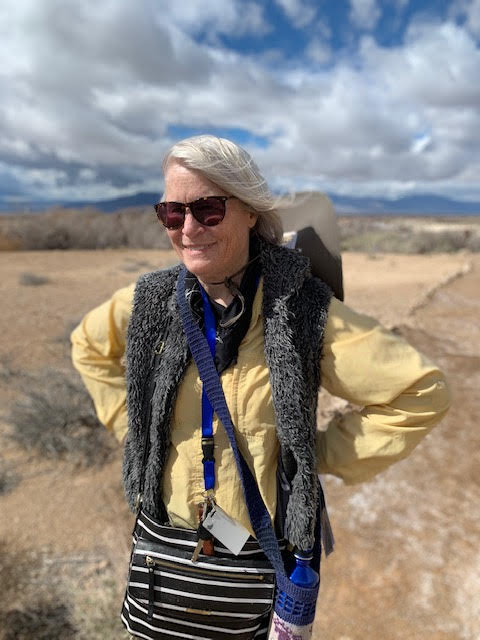
Gigi

binocs

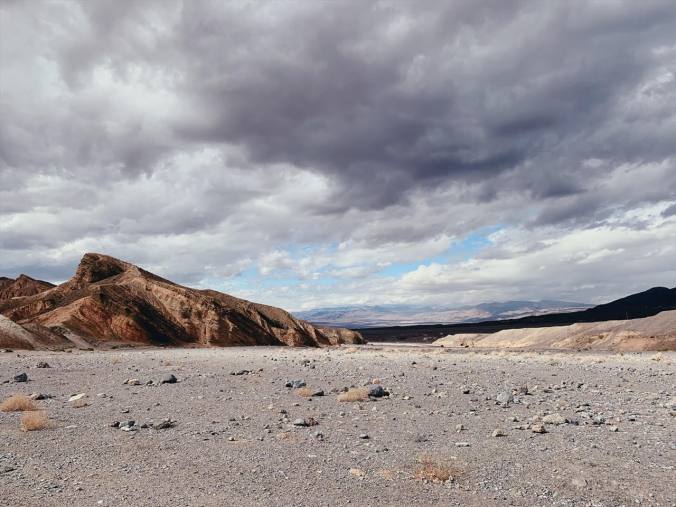
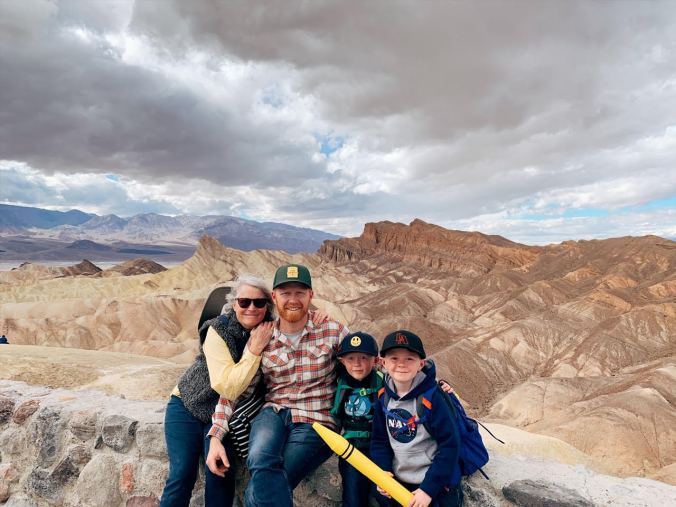
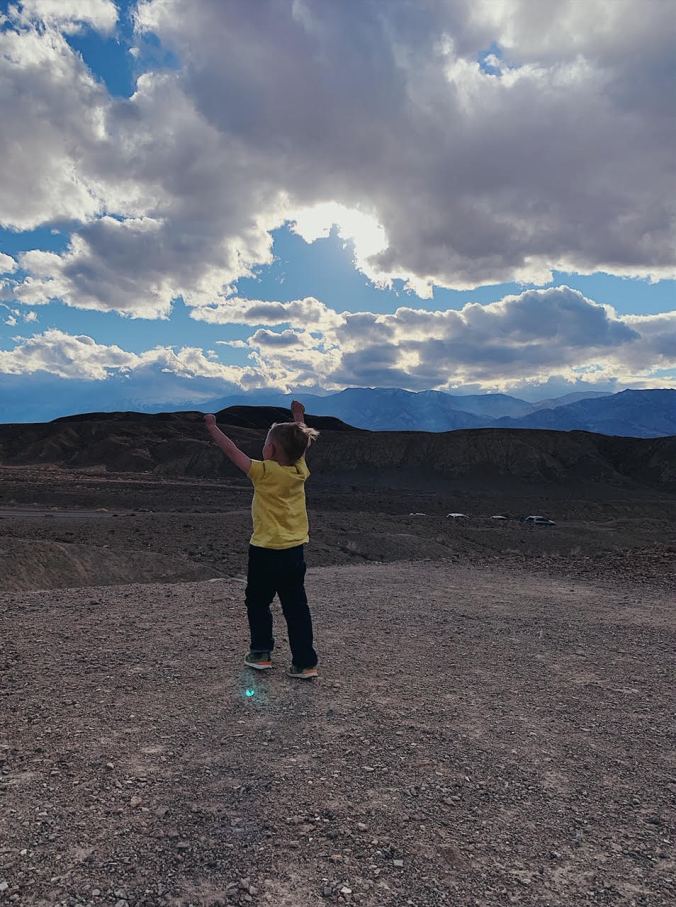
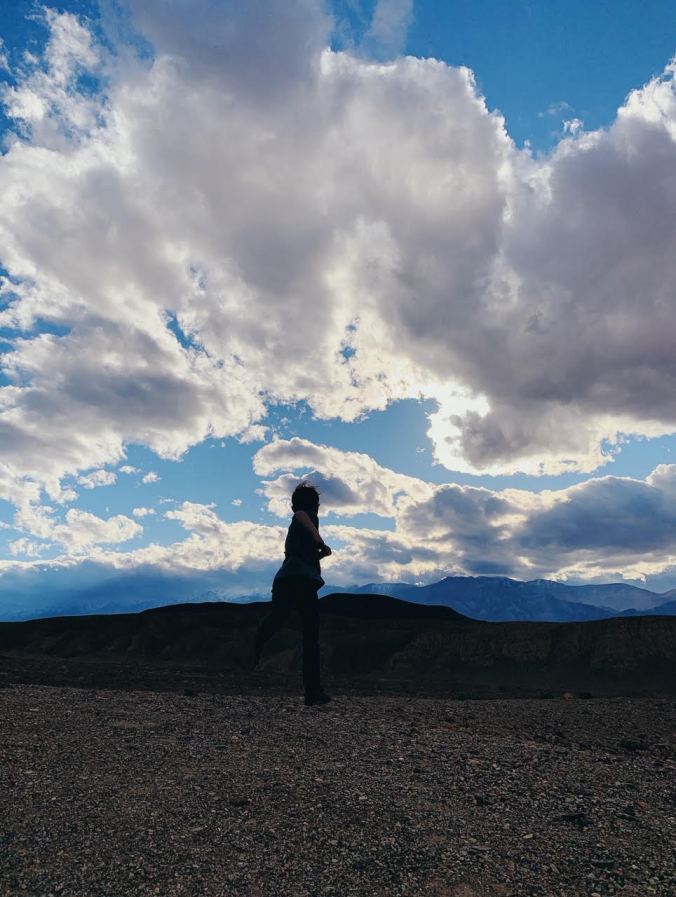
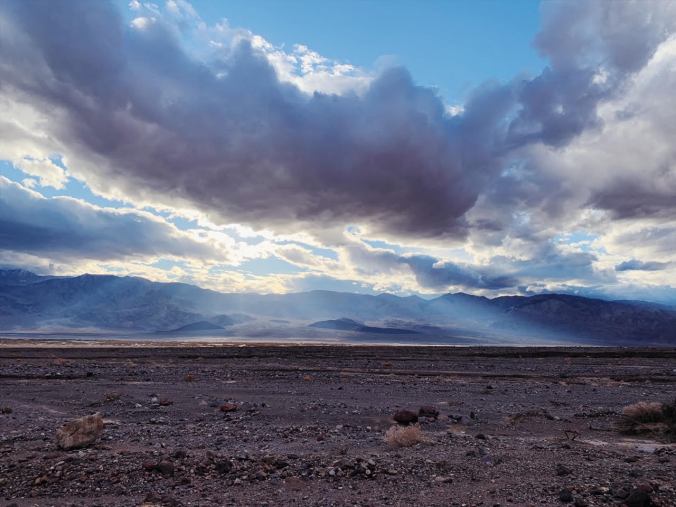
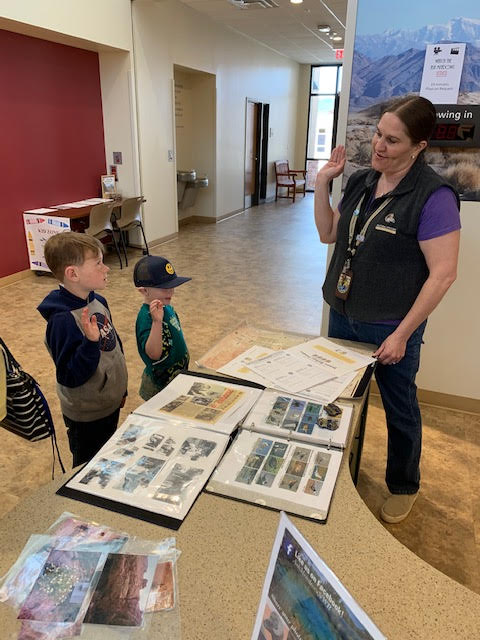
We stopped by the (super nice!) visitors center and gathered up our Junior Ranger materials before heading out to Death Valley National Park, a short drive away. We took a quick stroll at Zabriskie Point, and I tried not to let my jaw drop too much. I had no idea Death Valley was so beautiful, and here we were just barely scratching the surface. The boys were eager to get their wiggles out, and very much wanted to go “scrambling,” but we weren’t in the appropriate spots for that at the time. We took a drive through Artist’s Palette, and ran around a bit along the way. The desert warmth did not disappoint, with the boys eager to strip off their jackets and relish in the warmth. (ok, all of us)

Processed with VSCO with ka1 preset

Processed with VSCO with e1 preset

boys

Processed with VSCO with ka1 preset

Processed with VSCO with ka1 preset


Processed with VSCO with fv5 preset

The boys continued to work on the Ash Meadows Junior Ranger certifications in the truck, and later in the camper. Thankfully, help is allowed and the big brother was able to do some of the heavy lifting!

Sunday morning greeted us with more sun and warmer temps. We had a nice morning with a hearty breakfast and some time talking with God, at our picnic table, but not until the little one taught me to how to play Candy Crush– this was a waking desire he’d asked about the night before.
We stopped by the Ash Meadows visitors center and the boys had their work checked before getting sworn in for their Ash Meadows NWR Junior Ranger badges. After that we hustled back to Death Valley for a special event going on as part of the Dark Sky Festival— Build Your Own Mars Lander, hosted by representatives from NASA Goddard, Maryland.
They explained how “interplanetary geologists” such as themselves have been using Death Valley NP for decades to test landers & rovers, thanks to the area’s “otherworldly” characteristics– high heat (DVNP is a little hotter than Mars, though) very dry, sandy, etc. They explained how features such as sand dunes, alluvial fans, and mud cracks are all common to both DVNP, and other planetary exploration areas. Our “family design team” created a Mars Lander of our own with limited resources, time constraints, and performance requirements (land on the circle)… just like real scientists might do. The big kid wore BOTH his favorite NASA hoodie, and his space shuttle tee shirt for the day.
The big kid took engineering lead, the little one was the art director, Gigi was our legal counsel, and I was the project manager.

candycrush.jpg

garnercamper

swearin

Processed with VSCO with c1 preset

mudcracks.jpg

hikers

We made our way out of the park via the long way, my jaw dropping frequently, making mental notes of things we’d like to see next time we come up.

Processed with VSCO with e1 preset


Thanksgiving

Yesterday is a gift to today

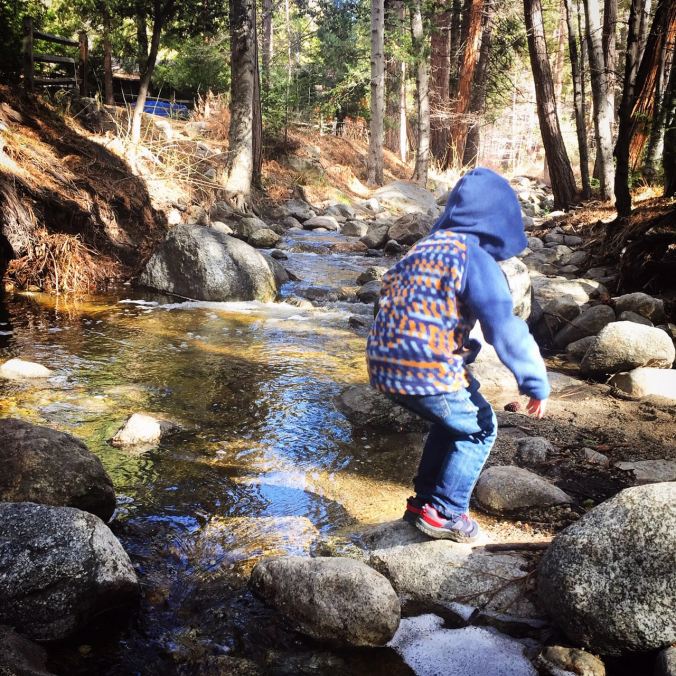
creek

God– one awesome word: Indescribable.

Children– my little men are like a reflection of a better me. Through them I’m encouraged to persist– urgently– on passing down the best family gifts, and breaking the spiritual chains that will not serve them.

Friendships– through persistent challenge and steadfast support, these relationships hone my spiritual growth.

Family– we come together, messy, looking out for our next generations.

Carpentry– I’m blessed to have gained skills from a life of handcraft, translating into an indisputable force for good, today.

Bicycles– my adolescent freedom. My first job. My tool for competition and building self esteem in my 20’s. My creative outlet in my 30’s, and the lifestyle that introduced me to so many of the friends I have today. Now… wind in my face, and the skills I’ve gained over decades bring me back to my body’s movement, help me talk with God, connect me with my children, my friends, my family, and my clients.


Chuckwalla Mountains– 2019 Start

My first post to the new blog– an ordinary, not average weekend with friends at a hidden away spot in the desert. 

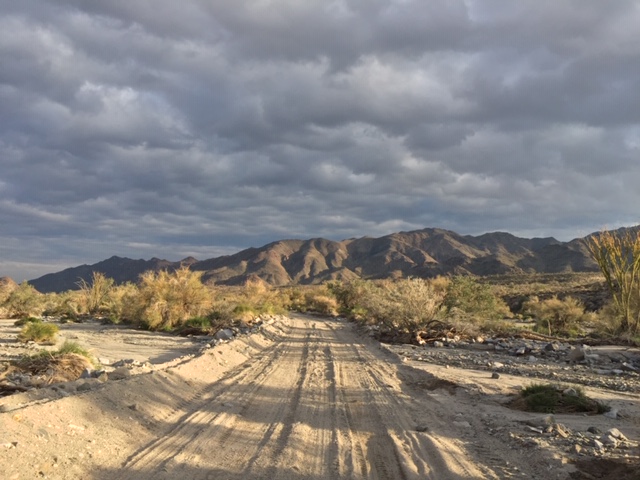
wash

Eric had been planning a bikepacking trip into JTNP, which became less favorable with the government shutdown, talk of the park closing, and ultimately a turn toward cold, rainy weather throughout Southern California. We decided to come up with a “plan B” in an area far to the east, and out of the weather– the Chuckwalla Mountains.

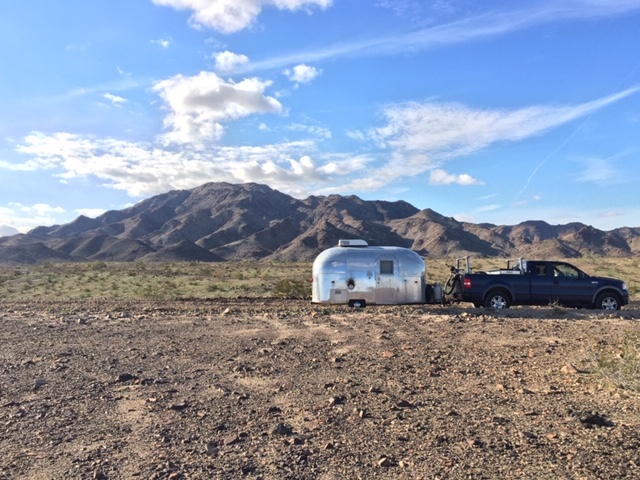
bambimountains

The Bambi and the Chuckwallas

I shot the message out to some friends– something to the effect of  “Hey we have this half-baked idea and we don’t really know whats out there, where to camp or what to expect. Oh and we’ll get there really late and it might rain. Wanna join?”

David’s 4 Runner was broken down and in the shop (something about meathead driving) and he managed to convince Ken it’d be a great idea to drive, late at night, to an unknown area, in a bit of January rain. David googled “things to do in Chuckwalla Mountains” and came up with some results. Tessa drove out from Los Angeles. We met up Friday night around 11pm, in a spooky palm oasis.

The next morning Eric joined us in camp and we made Mexican hot dogs for breakfast and rolled out into the nearby sand washes– and found petroglyphs galore.

petroglyphs

trail

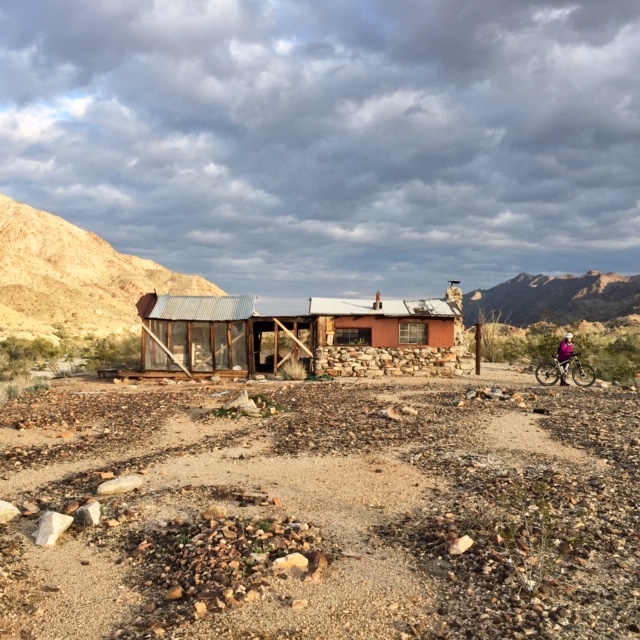
We began learning of a historical area character named Gus Lederer– a burro fancier, and flapjack maker. I won’t ruin the story for you in hopes you’ll go out, poke around, and discover it for yourself. It’s quite entertaining. We later found his cabin, and ultimately his grave site.

bigcabin

hikeabike

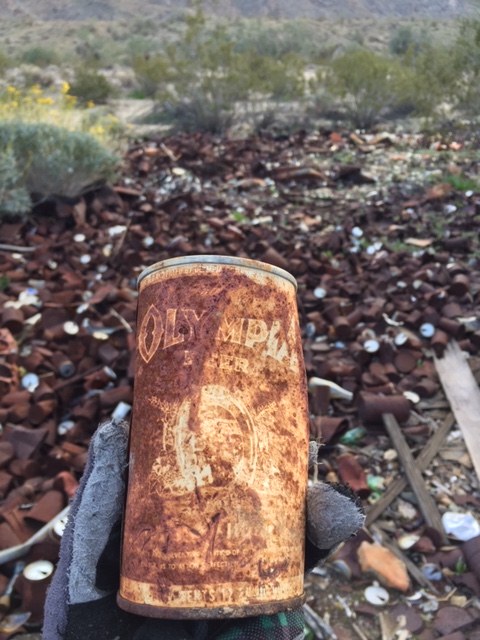
In the course of the next 36 hours we rode bikes, crashed on our face, made and ate lots of food, laughed around the campfire (“Cherro Gordo!”) collected rocks, discovered– and left all of– many artifacts, explored several mines, found more cabins, trucks, beer can collections, and reveled in sun, rain, clouds, and sand. It whet an interest in riding and exploring the desert I haven’t felt in a while, and I can’t wait to get out for more trips again soon.

brendancaveshelabambi

oly

kenimg_0261

davidgnar

davidcooking